Making: A Weekend Worth Trying
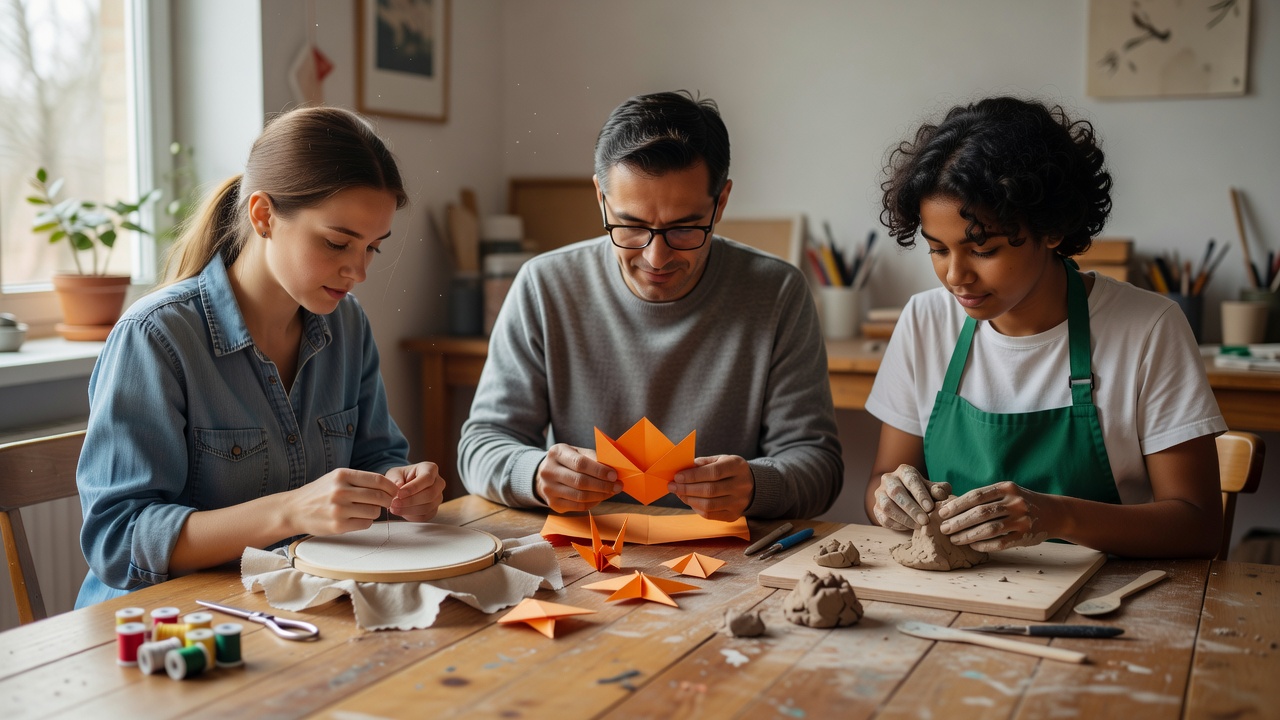
Three crafts that are quietly everywhere right now — each with a long history, each possible on a kitchen table, none requiring talent to start.
01 /Sashiko: a running stitch that tells a story
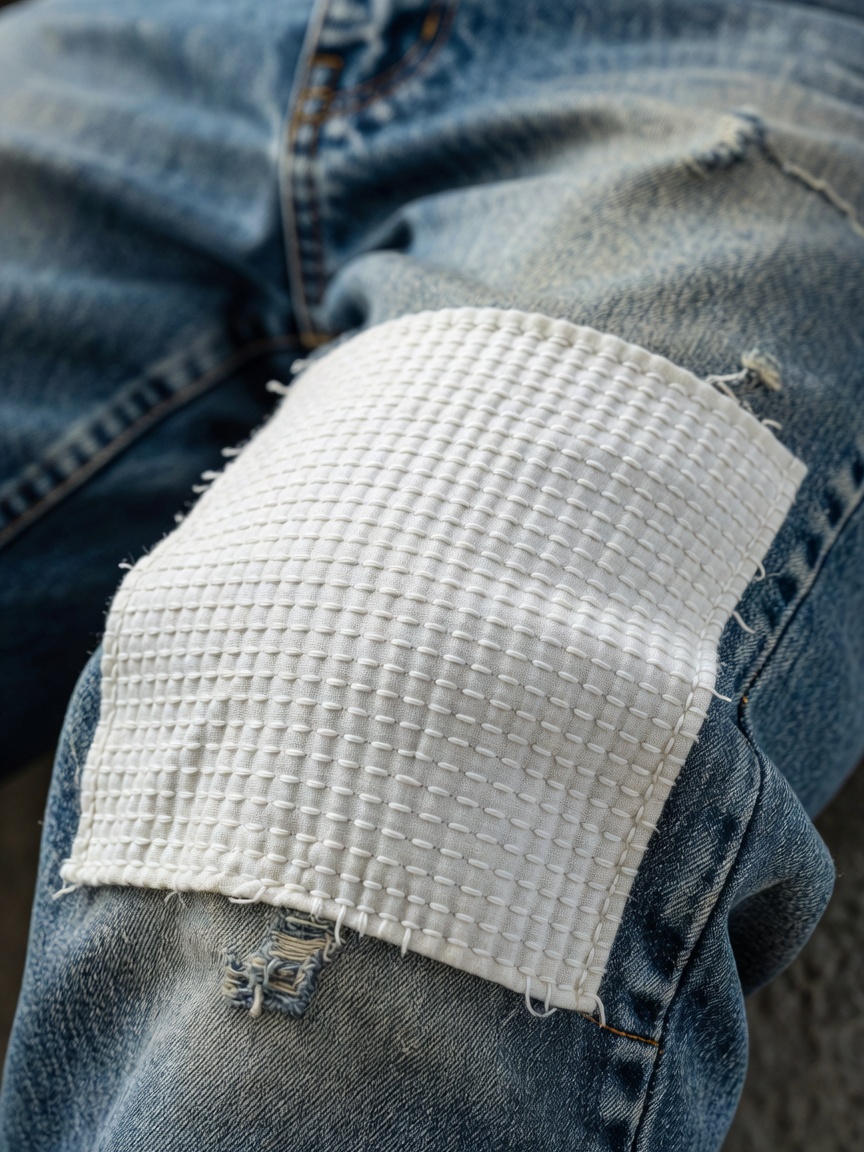
Sashiko means "little stabs" in Japanese. It began as a practical technique in rural Japan, where layers of worn cloth were stitched together to reinforce and warm work clothes, especially during the Edo period. Over time the stitches formed geometric patterns with names like asanoha (hemp leaf) and seigaiha (waves).
The related idea of boro — garments patched again and again over generations — now inspires fashion labels and the "visible mending" movement. It shares a spirit with kintsugi, the Japanese practice of repairing pottery with lacquer and gold: the repair becomes part of the object's beauty.
Take a worn knee or elbow, pin a scrap of fabric behind it, and stitch even rows of straight lines in a contrasting thread. Ten minutes a night finishes it within a week.
02 /Zines and the risograph glow
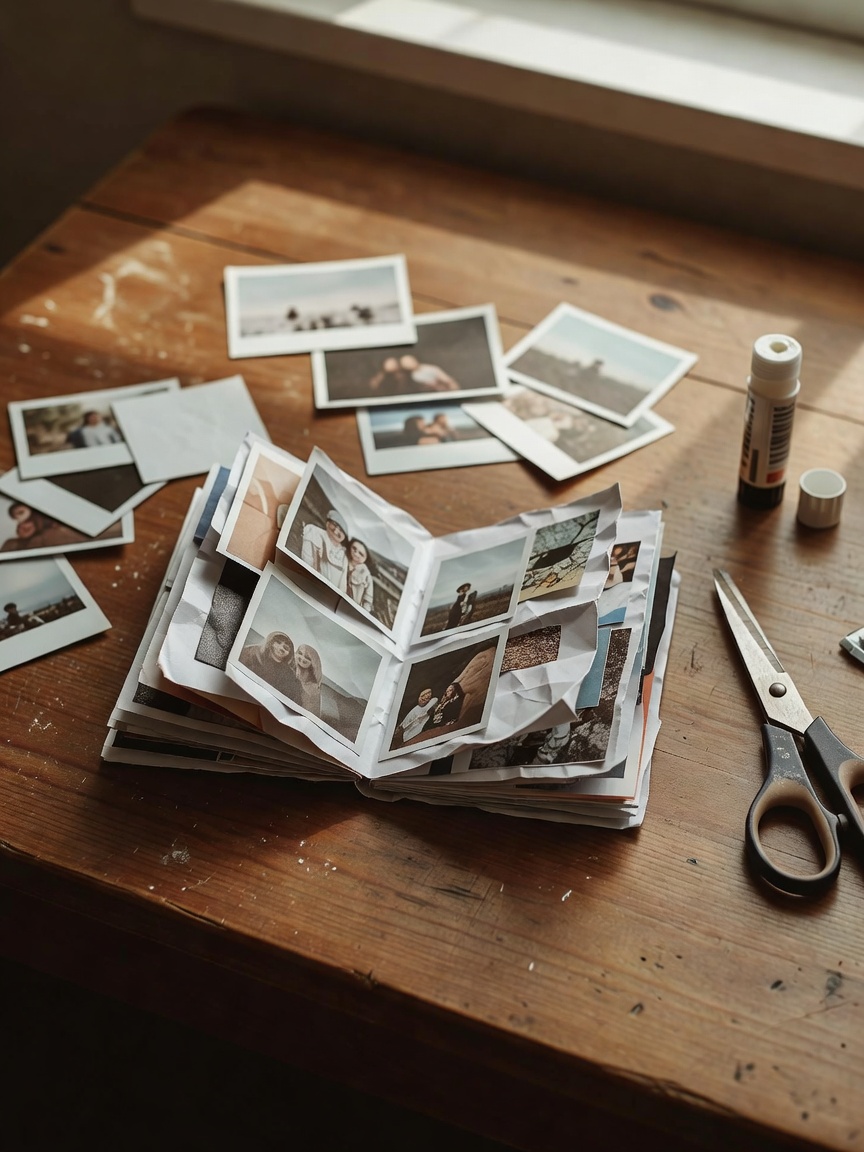
Zines — small, self-published booklets — have carried fan culture, punk, poetry and politics since the mid-twentieth century. Photocopiers made them cheap; the internet made them feel rare and tactile again. Many current zines are printed on the Risograph, a stencil duplicator from the Japanese company Riso Kagaku. Its slightly misaligned layers and grainy, vivid inks are now a recognisable aesthetic in posters and indie publishing.
You don't need a riso to start. An eight-page zine folds from a single sheet of A4 with one cut. Fill it with seven photographs from your week, a mural walk, or drawings of your favourite shopfronts.
Fold an A4 sheet into eight panels, cut a slit along the middle crease, and fold into a booklet. Draft in pencil before inking. Photocopy five and swap them with friends.
03 /Clay, without the wheel
Pottery classes have become one of the most popular weekend activities of recent years, helped along by television shows and slow-living feeds. But the oldest ceramics in the world were made without a wheel at all. Pinching, coiling and slab-building are how people made vessels for thousands of years — and they're the easiest way to begin today.
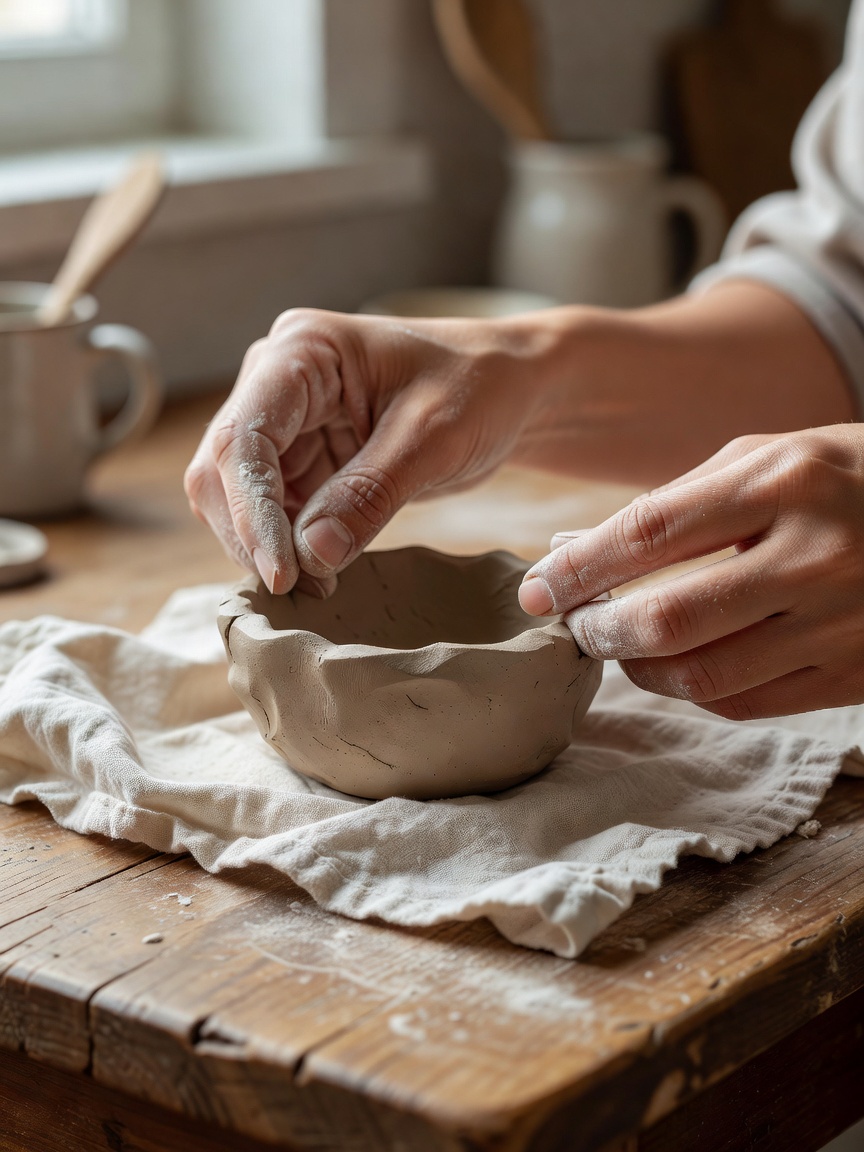
Air-dry clay lets you work at home without a kiln. The results aren't food-safe or waterproof, but they're perfect for trinket dishes, plant saucers (with a liner), or small sculptures for the shelf you edited in our interiors fieldnote.
Roll a ball of clay the size of a satsuma. Press your thumb into the centre and pinch the walls up gradually while turning. Stop when the walls are about the thickness of a coin.
04 /A gentle weekend plan
Saturday morning: walk somewhere you know and take seven photographs for a zine. Saturday afternoon: make two pinch pots and leave them to dry. Sunday morning: fold and fill your zine. Sunday evening: start a sashiko patch while listening to something you love.
That's it. You won't master any of these crafts in a weekend, and that's not the goal. The goal is to notice which one made time disappear — that's the hobby worth returning to. Libraries, community centres and local makerspaces often run low-cost workshops if you'd like company.
At the end of Sunday, write one sentence about each craft: what surprised you? Keep those notes; they're more useful than any trend list.